
How Do Bees Communicate With Each Other?
Have you ever wondered how bees communicate with each other? It’s fascinating to discover the intricate ways in which these tiny creatures relay messages and coordinate their actions as a hive. From sharing information about food sources to alerting each other of potential dangers, bees have a remarkable system of communication that relies on a combination of chemical signals, sounds, and specific movements. In this article, we’ll explore the fascinating world of bee communication and uncover the secrets behind their mesmerizing interactions.
Chemical Communication
Pheromones
Bees have an incredible ability to communicate through chemical signals, known as pheromones. Pheromones are secreted by various glands in the bee’s body and serve as a powerful means of communication within the hive. These chemical messages can elicit specific behaviors and responses from other bees in the colony.
Pheromones play a crucial role in coordinating activities within the hive, including foraging, reproduction, and defense. For instance, the queen bee releases a pheromone known as the queen mandibular pheromone, which regulates the behavior of the workers and helps maintain the harmony and cohesion of the colony. The queen pheromone also inhibits the development of ovaries in worker bees, thereby ensuring that only the queen is capable of laying eggs.
Mandibular Glands
One of the major sources of pheromones in bees is the mandibular glands. Located in the head of the bee, these glands produce a variety of chemical substances that can convey different messages. For example, the mandibular gland secretions of worker bees can act as an alarm signal, alerting other members of the colony to potential danger. These alarm pheromones can trigger a rapid response, encouraging bees to defend the hive against threats.
In addition to alarm pheromones, the mandibular glands also produce other pheromones that influence behavior and social organization within the hive. These chemical signals help regulate the division of labor among worker bees, ensuring that specific tasks, such as nursing the brood or foraging for food, are carried out efficiently and effectively.
Behavioral Communication
Dance Language
Bees are famous for their intricate dance language, known as the waggle dance. Through this captivating dance, forager bees communicate the location and quality of food sources to their nest mates. The waggle dance involves a series of movements that convey the direction, distance, and even the scent of the food source.
During the waggle dance, a forager bee performs a figure-eight pattern while vibrating its abdomen. The angle of the dance in relation to the vertical position of the comb indicates the direction of the food source relative to the sun. The duration of the waggle phase corresponds to the distance of the food source, with longer dances indicating a farther location.
By closely following the movements of the dancing bee and decoding the information encoded in the waggle dance, other worker bees can navigate their way to the food source with remarkable accuracy. This dance language is a remarkable example of the sophisticated communication skills of bees.
Vibration Signals
In addition to the waggle dance, bees also communicate through vibration signals. These vibrations, known as vibrational signals, are produced by worker bees by rapidly contracting their flight muscles while on the comb.
Vibration signals serve multiple purposes within the hive. For instance, worker bees may use vibrations to signal the need for a specific task to be performed. By emitting vibrations, they can attract and recruit other worker bees to help with activities such as removing debris or preparing cells for the queen’s eggs.
Furthermore, vibration signals are also used by queen bees to assert their dominance and regulate the behavior of other bees in the colony. By emitting specific vibrational patterns, the queen can influence the behavior and development of her workers, ensuring the smooth functioning of the hive.
Visual Communication
Body Language
Bees also utilize body language to communicate with each other. Just like other social insects, bees rely on various body movements and postures to convey messages to their fellow hive mates.
One example of body language in bees is the recruitment behavior of forager bees. When a forager bee discovers a valuable food source, it returns to the hive and performs a series of excited movements, known as the “waggling run.” This energetic behavior and body movement are interpreted as an indication of a profitable source of nectar or pollen, prompting other bees to follow and gather information about the food location.
Similarly, when bees engage in aggressive interactions or defend the hive from external threats, they display specific body postures and movements. These aggressive signals help establish dominance and deter potential intruders, ensuring the safety of the colony.
Waggle Dance
While the waggle dance primarily falls under behavioral communication, it is also a visual communication method employed by bees. The intricate movements and orientation of the waggle dance convey visual cues to other bees, aiding in precise navigation towards the food source.
During the waggle dance, the forager bee uses its body movements and position to relay information about the location and quality of the food source. By following the dancer’s movements and interpreting the visual signals, other worker bees can determine the direction and distance they need to travel to reach the food source accurately.
The waggle dance serves as a remarkable example of how bees utilize visual communication in addition to other forms of communication, such as pheromones and vibration signals, to ensure effective foraging within the colony.
Auditory Communication
Buzzing Sounds
Like many other animals, bees also utilize sounds as a form of communication within their hive. Bees produce buzzing sounds by rapidly vibrating their wings or by vibrating certain body parts against each other. These buzzing sounds serve various functions within the colony, including communication and defense.
For example, worker bees produce buzzing sounds during the waggle dance, which can be detected by other bees in close proximity. These sounds add an auditory element to the dance, complementing the visual cues provided by the dance movements. The combination of visual and auditory signals enhances the clarity of communication, ensuring that vital information about food sources is effectively conveyed to the rest of the colony.
Piping Signals
Piping signals are another form of auditory communication used by bees. Queen bees emit piping sounds by contracting their wing muscles, creating a unique vibrational pattern. These piping signals are primarily used during swarming, the process of forming a new colony.
The queen bee’s piping signals help establish and maintain the hierarchy within the swarm. In response to the queen’s piping, worker bees also produce specific sounds, indicating their acceptance of the queen’s presence and leadership. These acoustic signals play a critical role in swarm coordination, ensuring the efficient establishment of a new colony.
Tactile Communication
Antennation
Bees communicate through tactile interactions, and one prominent example of such communication is antennation. Antennation involves bees touching and exploring each other’s bodies, particularly their antennae.
By antennating each other, bees exchange chemical signals, enabling them to recognize each other’s colony membership, individual identity, and reproductive status. Tactile interactions using the antennae also occur during food sharing and nest mate recognition, facilitating social cohesion within the hive.
Antennation plays a crucial role in regulating various social behaviors, such as brood care, grooming, and nest building. Through these tactile interactions, bees maintain harmony within the colony and effectively coordinate their tasks for the benefit of the entire hive.
Trophallaxis
Another form of tactile communication in bees is trophallaxis, a behavior where bees directly exchange food or other substances by mouth-to-mouth contact. Trophallaxis allows bees to share valuable resources within the colony and maintain a balanced nutrient distribution.
During trophallaxis, worker bees transfer food or other substances through regurgitation or by depositing the substance directly into the recipient bee’s mouth. This exchange of liquids helps regulate the nutritional status of the colony, ensuring that all bees have access to the necessary resources.
Tactile communication through trophallaxis is crucial for the social organization and overall success of the hive. It facilitates cooperation and mutual support among the bees, enhancing their ability to adapt to changing environmental conditions and maintain the well-being of the colony as a whole.
Recruitment Communication
Alarms and Recruitment Pheromones
Bees employ a combination of chemical and behavioral signals for recruitment communication within the colony. In times of danger or disturbance, worker bees release alarm pheromones, which alert other members of the colony to potential threats. These alarm pheromones trigger a rapid response, mobilizing bees to defend the hive.
In addition to alarm pheromones, bees also utilize recruitment pheromones to direct and coordinate the collective efforts of the colony. These pheromones are secreted by worker bees that have discovered a valuable food source. By releasing recruitment pheromones, the forager bee communicates the location and desirability of the food source, attracting and directing other workers to join in the foraging effort.
The combined effect of alarm and recruitment pheromones ensures efficient communication and rapid response within the hive, highlighting the cooperation and coordination that underpin the success of a bee colony.
Bee Signals
In addition to chemical pheromones, bees communicate recruitment information through specific behavioral signals. For example, during the waggle dance, the forager bee communicates not only the direction and distance to the food source but also its desirability and availability. The intensity and duration of the waggle dance provide important cues for other bees to assess the quality and quantity of the food resource being communicated.
Furthermore, bees engage in a unique behavior known as “tremble dancing” to convey information about food source profitability. During this behavior, a returning forager bee shakes its body rapidly, signaling to other bees that the food source is abundant. The intensity and frequency of the tremble dance correlate with the richness of the resource, attracting more bees to join in the foraging effort.
The combination of chemical pheromones and behavioral signals ensures effective recruitment communication, allowing colonies to optimize their foraging strategies and efficiently exploit available resources.
Foraging Communication
Food Source Location
Bees rely on various communication methods to convey information about the location of food sources. The most well-known method is the waggle dance, as mentioned earlier. Through this dance, forager bees provide precise information about the direction and distance to the food source.
In addition to the waggle dance, bees also utilize other visual cues to indicate the location of food sources. For example, bees may return to the hive with pollen on their bodies, providing a visual sign that pollen is available in the vicinity. Other bees can observe these visual cues and follow the scent trails left by the pollen-bearing bees to locate the food source.
Furthermore, bees may also engage in tandem running, where a guiding bee leads a follower bee to a specific food source. This form of communication involves physical contact and the use of sensory cues, allowing the follower bee to learn the route and remember the location of the food source.
Quality and Quantity Indicators
Communication among bees about food sources extends beyond mere location. Bees also convey information about the quality and quantity of food sources, enabling efficient foraging decisions within the colony.
Bees can assess the quality of nectar by its sugar concentration and scent, allowing them to prioritize the most nutritious sources. By observing returning foragers and analyzing the characteristics of their collected nectar, other bees can assess the desirability of the food source and adjust their foraging behavior accordingly.
Additionally, bees use various mechanisms to communicate the quantity of food available in a particular source. For example, the intensity of a waggle dance can indicate the richness of the food source, with bees adjusting their foraging efforts based on the communicated information. By efficiently sharing information about food quality and quantity, bees optimize their foraging strategies and ensure the maximum utilization of available food resources.
Swarm Communication
Queen Piping
Swarming is a key event in the life cycle of a honeybee colony, where a new swarm is formed to establish a separate colony. During swarming, the queen bee plays a crucial role in communicating with the worker bees through a behavior known as queen piping.
Queen piping involves the queen bee emitting high-pitched sounds by vibrating her wing muscles. These sounds, resembling a continuous series of “pipes,” serve as an auditory signal that helps attract worker bees and coordinates the swarm as it gathers in preparation for departure.
The queen’s piping signals are important for swarm cohesion and the establishment of a new colony. The worker bees respond to the piping by joining the swarm, guiding the queen to a suitable location, and eventually establishing a new hive. This remarkable form of communication ensures the survival and successful reproduction of honeybee colonies.
Worker Procession Signals
Once a swarm has gathered and settles on a temporary resting site, the worker bees continue to communicate through various signals to coordinate their actions and ensure the well-being of the swarm.
Worker procession signals involve a series of movements and vibrations performed by worker bees to communicate information within the swarm. These signals help establish a hierarchical order and enable collective decision-making for important activities, such as locating a new permanent hive or initiating foraging efforts.
By utilizing worker procession signals, bees effectively communicate their preferences and intentions, facilitating the swarm’s ability to adapt to changing conditions and make collective decisions that are crucial for their survival and successful settlement.
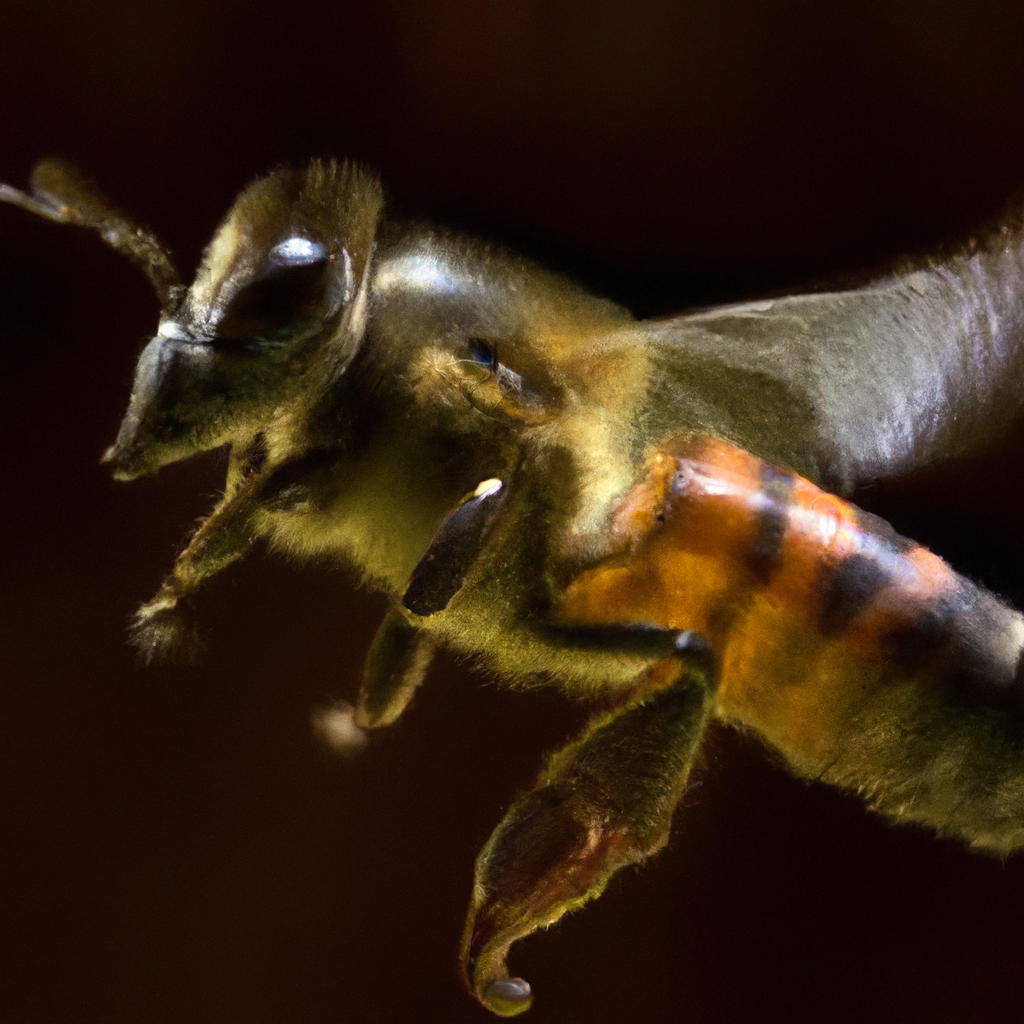
Defense Communication
Alarm Pheromones
When bees sense a threat to their hive, they have an extraordinary ability to communicate danger through alarm pheromones. Alarm pheromones are released by worker bees in response to physical agitation or the detection of predators or intruders.
These pheromones serve as a warning signal to other colony members, triggering a rapid response and enabling collective defense. The alarm pheromones can induce aggressive behavior, rallying bees to attack the perceived threat and safeguard the hive.
The ability to communicate through alarm pheromones allows bees to mobilize their defenses quickly and effectively, ensuring the survival and protection of the colony.
Wing Beating Signals
In addition to chemical alarm signals, bees also use specific behavioral signals, such as wing beating, to communicate danger. When a threat is detected, bees may vigorously beat their wings, creating vibrating signals that propagate through the hive.
The wing beating signals serve as a warning to other bees, indicating the presence of disturbance and the need for immediate action. By synchronizing their wing beats, bees generate a collective response, ensuring a coordinated defense mechanism to repel threats.
Through the use of wing beating signals, bees effectively communicate danger to the entire colony, allowing for swift and decisive action to safeguard the hive and protect their valuable resources.
Temperature Regulation Communication
Shivering Signals
Maintaining an optimal temperature within the hive is essential for the survival and well-being of the bee colony. In colder temperatures, bees employ a fascinating form of communication called shivering signals to generate heat collectively.
When the ambient temperature drops, bees contract their flight muscles rapidly, generating heat through a process known as thermogenesis. This heat is then transferred from bee to bee through physical contact. As more bees join in, the heat generated by shivering intensifies, helping to maintain the warm temperature required for the brood’s development and the overall hive function.
Shivering signals exemplify the remarkable teamwork and communication abilities of bees, allowing them to efficiently regulate the internal temperature of the hive and ensure the survival of the colony in cold weather conditions.
Fanning Signals
During hot weather conditions, bees employ another form of temperature regulation communication known as fanning signals. Fanning signals involve bees creating air currents by beating their wings, facilitating air circulation within the hive and promoting cooling.
By fanning their wings, bees effectively spread cooler air through evaporation, helping to lower the temperature in the hive. The fanning signals also help to distribute odorous pheromones, aiding in the removal of heat and regulating the overall climate within the colony.
Through the use of fanning signals, bees ensure that the hive remains at an optimal temperature, allowing for the proper functioning of the brood and the overall survival of the colony.
In conclusion, bees have developed a sophisticated and intricate system of communication, utilizing various forms of chemical, behavioral, visual, auditory, tactile, and temperature regulation signals. These communication methods allow bees to efficiently coordinate their activities, make collective decisions, and ensure the survival and well-being of their colonies. The remarkable social organization and communication skills of bees provide valuable insights into the complexity and adaptability of nature’s most industrious insects. So, the next time you observe a buzzing hive or witness a waggle dance, marvel at the intricate language of communication that keeps the world of bees buzzing with life.


