
Are Bees Intelligent?
Have you ever wondered about the intelligence of bees? Despite their small size and simplicity, bees actually possess a remarkable level of intelligence. From their complex communication methods to their impressive problem-solving skills, these tiny creatures continue to surprise researchers and challenge the notion of what it means to be intelligent. In this article, we will explore the fascinating world of bee intelligence and delve into the remarkable abilities that these buzzing insects possess. So, get ready to be amazed by the extraordinary intelligence of bees.
Are Bees Intelligent?

The intelligence of bees has long been a subject of fascination and study
Bees have captivated the attention of humans for centuries, with their complex social structures, impressive navigation skills, and ability to communicate with each other. This has led scientists to question whether bees possess a form of intelligence. While traditional notions of intelligence often emphasize cognitive abilities found in humans, bees exhibit unique behaviors and capabilities that suggest they possess a form of intelligence adapted to their specific needs.
What does it mean for an animal to be intelligent?
Intelligence can be broadly defined as the capacity to acquire and apply knowledge, solve problems, and adapt to new situations. However, in the animal kingdom, intelligence can take on various forms. Rather than directly comparing the intelligence of bees to that of humans, it is essential to understand the specific behaviors and abilities that bees possess, which may be considered intelligent within their ecological context.
The behavior and abilities of bees
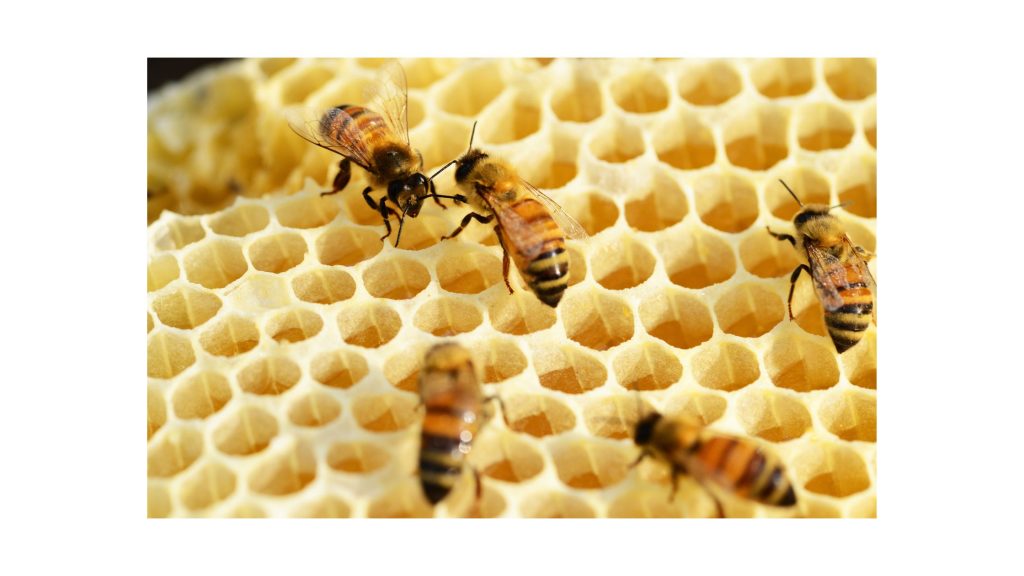
Bees, particularly honeybees, have been observed performing a wide range of remarkable behaviors. For instance, their ability to construct intricate honeycomb structures demonstrates sophisticated engineering skills. Bees are also exceptional foragers, capable of remembering and communicating the location and quality of food sources to their nestmates, using a form of dance known as the waggle dance. Additionally, bees exhibit impressive skills in navigation, being able to communicate the location of their hive precisely and navigate long distances using landmarks and the position of the sun.
The brain of a bee
Despite their small size, bees possess relatively complex brains. Their brains consist of about one million neurons, which is modest compared to the human brain but crucial for their cognitive abilities. The bee brain is organized into different regions, each with specific functions. The mushroom bodies, in particular, are responsible for learning, memory, and sensory integration, playing a vital role in the cognitive processes of bees. While their brain structure may differ from that of humans, bees still exhibit a level of complexity that allows for intelligent behavior.

Learning and memory in bees
Bees have shown remarkable learning and memory capabilities. They have the ability to remember the location of food sources even after visiting them just once and can recall these locations after several days or even weeks. This ability is crucial for efficient foraging, as bees can optimize their search for resources based on past experiences. Bees can also learn to associate specific colors, shapes, and scents with rewarding or punishing outcomes, allowing them to make informed decisions in their environment.
Communication and navigation
Communication is a vital aspect of bee behavior, and honeybees have developed a unique and intricate system of communication. Through their waggle dance, bees provide detailed information to their nestmates regarding the location, direction, and distance of a food source. This dance conveys important information that allows other bees to accurately locate and exploit valuable resources. In addition to communication, bees also possess impressive navigational abilities. They can use the position of the sun, landmarks, and their internal magnetic compass to navigate and return precisely to their hive, even after travelling long distances.

Social organization
Bees are highly social insects, living in large colonies that exhibit complex social organization. Each bee has a specific role within the colony, from foragers to nurses and queen attendants. This social structure requires individual bees to communicate, coordinate tasks, and make decisions in a way that benefits the entire colony. The sophisticated division of labor, combined with effective communication, demonstrates a level of intelligence that allows bees to thrive as a collective unit.
Problem-solving and decision-making
Bees have proven their ability to solve complex problems. In laboratory experiments, bees have been shown to navigate mazes, learn to manipulate objects, and even demonstrate abstract concepts such as numerical ordering. They can adapt their problem-solving strategies based on changing circumstances, displaying a level of cognitive flexibility. Moreover, bees are capable of making decisions, weighing costs and benefits when faced with various options, such as choosing between multiple food sources or potential nest sites.
Comparisons with other animals
While comparisons between species can be challenging, some studies have compared the cognitive abilities of bees to those of other animals. Bees have demonstrated similar problem-solving skills to some birds and mammals, such as the ability to understand concepts of sameness and difference. They have also shown numerical reasoning abilities that rival those of primates. However, it is essential to acknowledge that intelligence can take different forms, depending on the ecological niche and evolutionary pressures experienced by each species.
Implications and future research
Studying the intelligence of bees not only provides insights into the cognitive capabilities of these remarkable insects but also has broader implications. Understanding how bees learn, remember, communicate, and make decisions can have practical applications, particularly in the field of robotics and artificial intelligence. Furthermore, the study of bee intelligence can help us appreciate the diversity of cognitive abilities present in the natural world, challenging our preconceptions about what it means to be intelligent.
As the research on bee intelligence continues, scientists are uncovering more about the incredible behaviors and abilities of these tiny creatures. Their complex social organization, problem-solving skills, and impressive memory capacity suggest that the intelligence of bees extends beyond our initial understanding. By appreciating the unique forms of intelligence found in different species, we gain a deeper understanding of the natural world and our place within it.